From the Beginning of Winter to the Beginning of Spring, encompassing six solar terms-Beginning of Winter, Minor Snow, Major Snow, Winter Solstice, Minor Cold, and Major Cold-is the coldest season of the year. The cold winter climate causes stagnation and contraction of Qi and blood, easily leading to poor circulation and causing many old illnesses to relapse or worsen. In particular, life-threatening diseases such as stroke, cerebral hemorrhage, and myocardial infarction not only see a significant increase in incidence but also a sharp rise in mortality.
During heavy snow, the body’s yang energy is stored away, and blood and qi tend to flow inward. This makes it difficult for dampness to escape, which inadvertently increases the burden on the kidneys, easily leading to edema, nephritis, bedwetting, urinary incontinence, and other diseases. Therefore, kidney care is important for health maintenance in winter.
A key principle of health preservation during the Great Snow period is “nourishing the kidneys and preventing cold.” The kidneys are the lifeblood of the human body; strong kidney qi leads to strong vitality, enabling the body to adapt to the changes of winter. The key to ensuring strong kidney qi is preventing the invasion of harsh weather. In winter, the body’s yang qi is drawn inward, and physiological activities also tend to slow down. At this time, the kidneys must prepare sufficient energy to maintain winter heat expenditure and store energy for the coming year; therefore, nourishing the kidneys is crucial at this time.
Health tips for the elderly during the heavy snow season
In terms of diet, it’s important to eat more animal-based foods and legumes to supplement vitamins and minerals. Dog meat, mutton, goose meat, duck meat, soybeans, walnuts, chestnuts, black fungus, sesame seeds, sweet potatoes, and radishes are all suitable foods to eat more of in winter. In winter, kidney function tends to be more active; eating too many salty foods can cause excessive kidney energy, weakening the heart and affecting health. Therefore, it’s advisable to eat less salty food in winter to prevent excessive kidney water. It’s appropriate to eat more bitter foods to nourish the heart and enhance kidney function, such as vinegar, tea, betel nut, oranges, pork liver, lamb liver, and turnips.
During heavy snow, the recommended sleep schedule is “early to bed and late to rise.” It’s best to wake up after sunrise. Going to bed early helps preserve the body’s Yang energy and keeps the body warm, while waking up late nourishes the body’s Yin energy. Waking up after sunrise helps avoid the severe cold. Don’t try to stay warm by covering your head while sleeping. The air inside the blankets doesn’t circulate, and oxygen levels decrease, which can easily cause chest tightness, nausea, vivid dreams, and night sweats.
When exercising during the heavy snow season, it is essential to pay attention to sports hygiene. Colds are common in winter, and if you have a cold or fever, never engage in strenuous exercise. Otherwise, it may worsen your condition or even trigger a myocardial infarction or myocarditis. Always warm up thoroughly before exercising in winter. In cold conditions, muscles are stiff and joint flexibility is reduced, making you prone to muscle strains or joint contusions.
Winter mental well-being should also focus on “conservation,” meaning maintaining mental tranquility to prevent seasonal affective disorder (SAD). Some people experience depression, lethargy, and excessive sleepiness in winter, primarily due to the cold weather. The correct approach is to get plenty of sunshine, strengthen physical exercise, and try to avoid states of tension, irritability, and depression.
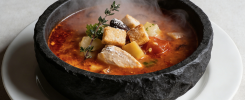
During the heavy snow and cold weather, the elderly should drink more soup.
Heavy snow marks the peak of winter’s cold, and the elderly should engage in dietary therapy to nourish themselves. The methods differ depending on their constitution, specifically for those with Yang deficiency or Yin deficiency. Yang deficiency refers to a weakness of Yang energy, generally manifesting as aversion to cold, cold limbs, pale tongue, white tongue coating, and fatigue. Yin deficiency manifests as emaciation, dizziness, fatigue, dry mouth and tongue, red tongue, and little or no tongue coating. The following are dietary therapy recipes for the elderly:
Dietary therapy prescription for Yang deficiency
15g of Codonopsis pilosula, 10g of Angelica sinensis root, 30g of Astragalus membranaceus, 10g of ginger, and half a catty of mutton.
Usage: Wash half a pound of mutton, add the herbs, and stew for 2 hours. Drink the soup and eat the meat.
Treatment mechanism: Tonifies Qi and warms Yang, replenishes essence and marrow.
Dietary therapy prescription for Yin deficiency
15g of Polygonatum odoratum, 15g of Polygonatum sibiricum, 30g of processed Polygonum multiflorum, 30g of raw Rehmannia glutinosa, 30g of prepared Rehmannia glutinosa, 1 pair of pork kidneys, and half a catty of lean pork.
Usage: Wash one pair of pork kidneys and remove the kidney ends. Wash half a pound of lean meat, add the herbs, and stew for 2 hours. Drink the soup and eat the meat.
Treatment mechanism: Nourishing Yin and generating fluids, moisturizing dryness, and nourishing the liver and kidneys.